When buying a diesel generator, there is a question just as important as how many kVA of power you need: which body will you buy the generator in? An enclosed (silent) type, or an open type? This is exactly where the topic of the enclosed vs open type generator difference comes into play. The wrong body choice can leave you either paying more than necessary or, after installation, facing problems with noise, weather conditions or maintenance access. In this article we cover what the two body types are for, when each one makes more sense, and the criteria you should look at when making your decision, all in plain engineering language.
Why Does the Generator Body Matter?
The heart of the generator is the engine, the alternator and the control panel. The body is the part that carries, protects and manages the sound of this equipment. A generator of the same power can be offered on an open type skid, or placed inside a sound-insulated cabinet. Engine and alternator performance usually stays the same; what changes is how the generator interacts with its operating environment.
The choice of body directly affects the following four areas:
- Noise: The cabinet significantly reduces engine and exhaust noise.
- Protection: The cabinet forms a physical barrier against rain, dust, sun and wind.
- Installation location: Some bodies are more suitable for outdoors, others for an enclosed machine room.
- Cost and maintenance: The open type is generally more economical and access to components is easier.
For this reason the body is not a detail to "think about later," but a decision that should be made from the very start together with your installation location.
What Is an Enclosed (Silent) Type Generator?
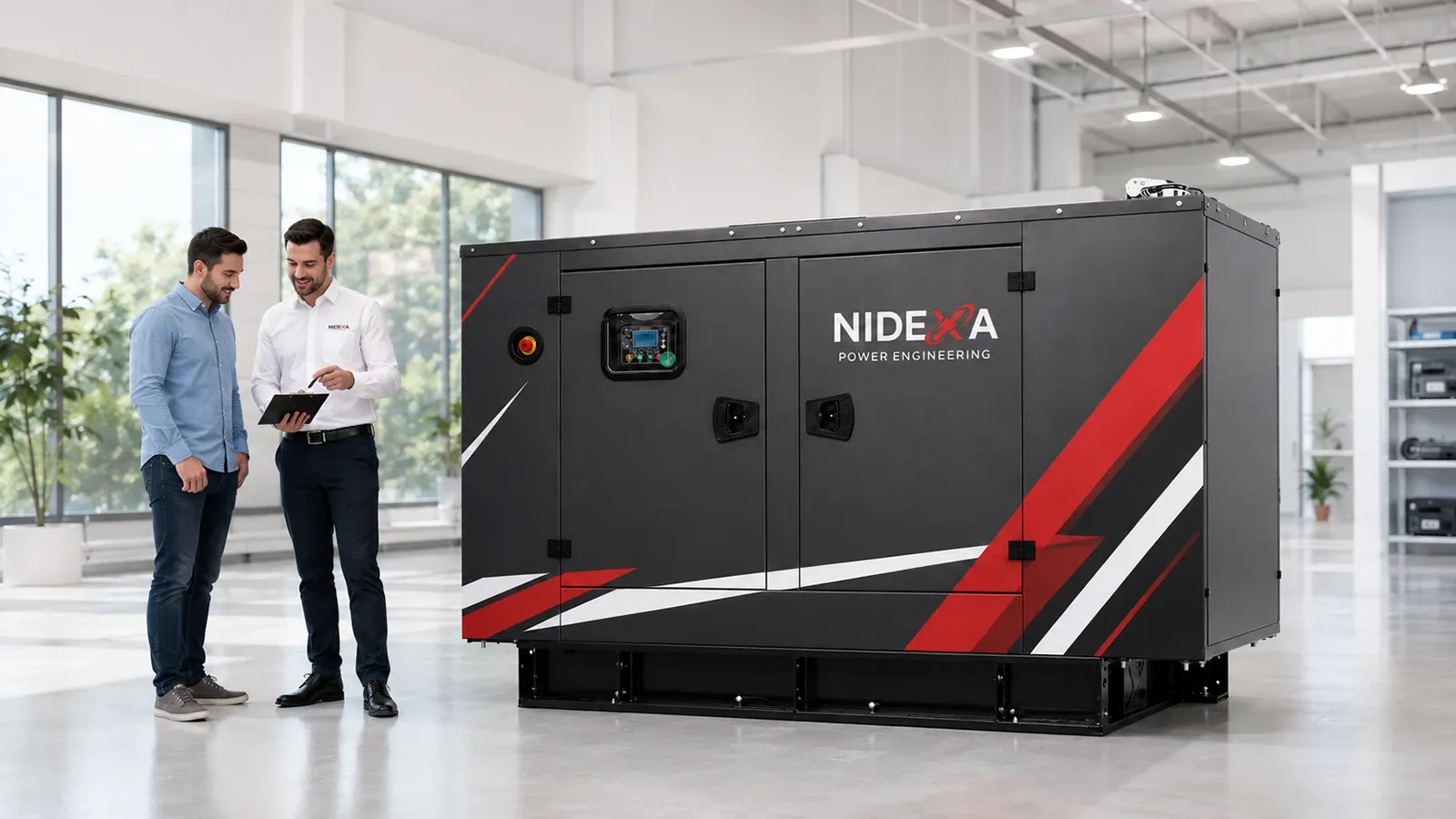
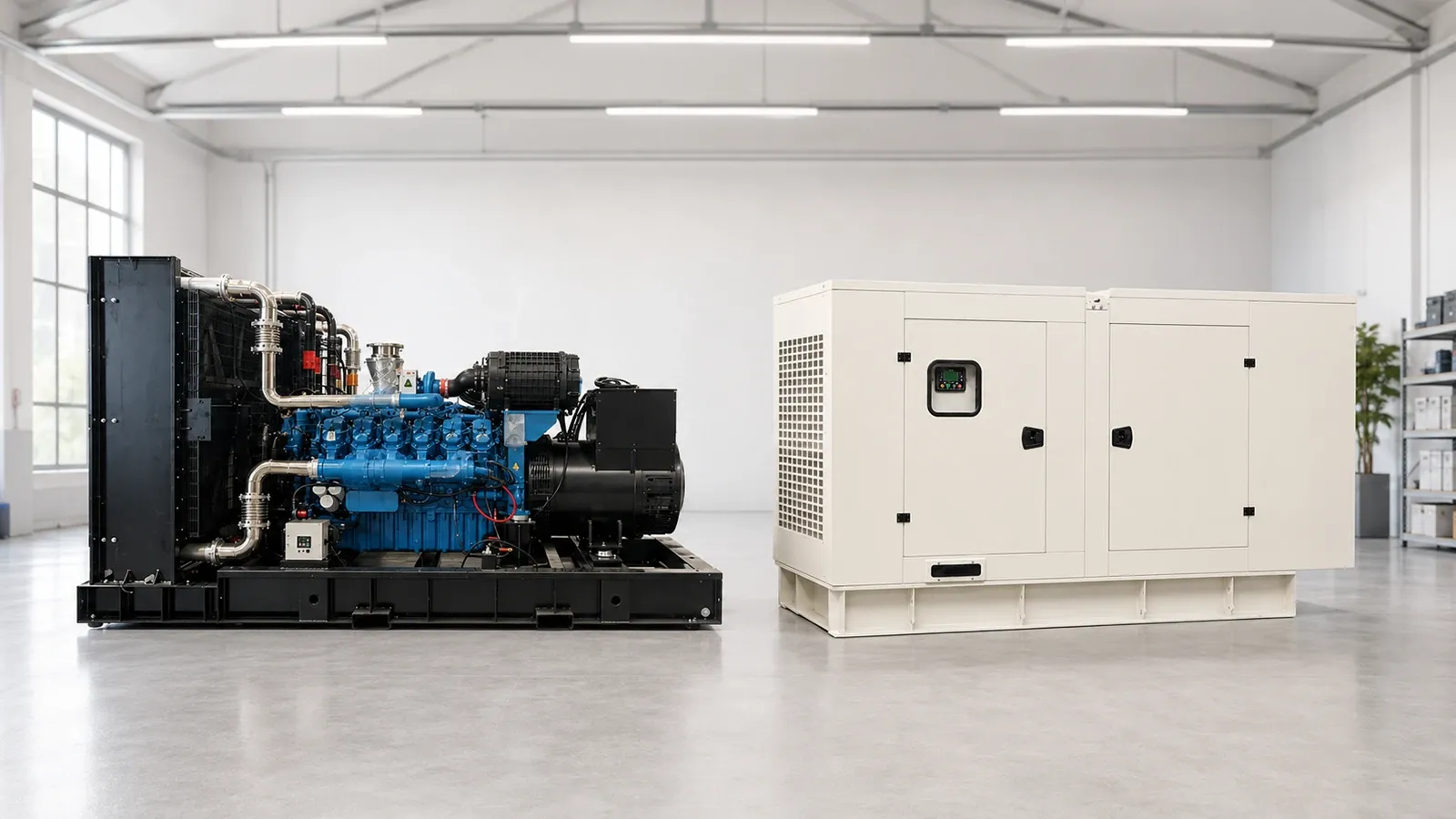
An enclosed generator is the type in which the engine and alternator are placed inside a sound-insulated metal housing. On the market it is also referred to as a "silent generator" or "canopied generator." The inner surface of the cabinet is usually lined with sound-absorbing material, there is a silencer on the exhaust line, and the air inlets and outlets are designed to limit the spread of sound to the outside.
Noise reduction
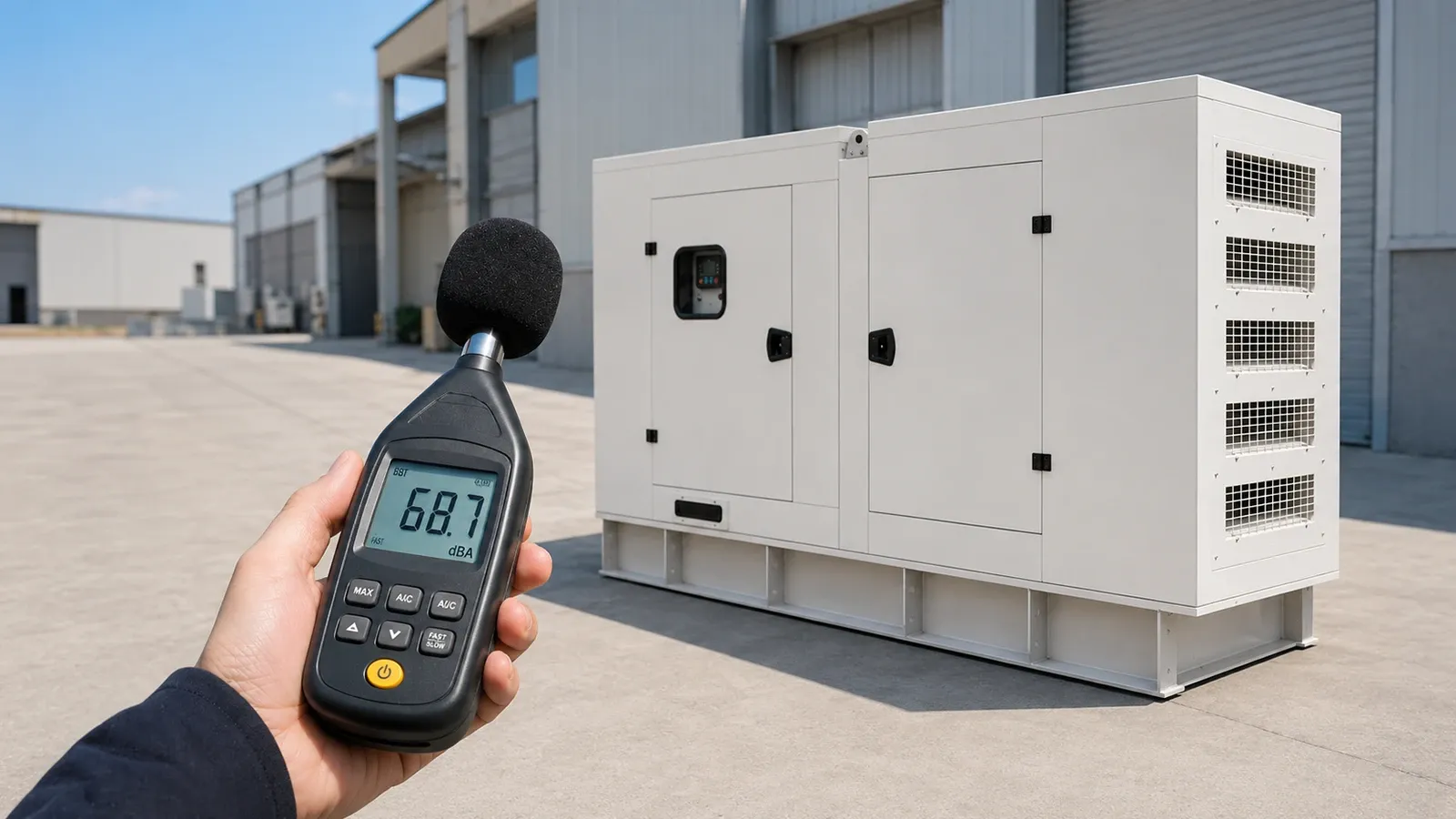
The most noticeable advantage of the enclosed type is noise. The sound of the diesel engine drops significantly thanks to the insulated cabinet and the silencer. There is an important engineering detail here: the noise level is measured in dBA, and this is a logarithmic scale. That is, every 10 dBA of reduction is perceived by the ear as roughly "half as loud." For this reason the reduction the cabinet provides creates a bigger comfort difference than the numbers might suggest. We cover how sound levels are read and what is considered noise in detail in our sound level guide.
Protection against outdoor weather conditions
The cabinet does more than reduce noise; it also protects the generator itself. Rain, snow, dust, direct sunlight and wind are challenging conditions for an exposed engine. The enclosed type acts as a physical shield against these factors. This protection becomes critical especially in cases where the generator will be installed outside a building, in an open area or on a roof.
Outdoor and field installation
Enclosed generators are a practical solution because they can be placed directly outdoors without building a separate machine room. The backyard of a business, a corner of a hotel complex, a construction site or a platform outside a building are typical installation locations for the enclosed type. Since the cabinet provides both noise and weather protection, it reduces the need for an additional structure in these scenarios.
What Is an Open Type Generator?
An open type generator is the type in which the engine, alternator and control panel are offered on a skid (frame) without any cabinet. All components are visible and directly accessible. This simplicity defines both the strengths and the limitations of the open type.
Machine room and indoor installation
The open type is mostly preferred when sound insulation and weather protection are provided by the building itself. In other words, if the generator will be installed in a properly ventilated, acoustically insulated machine room or an enclosed technical space, the protection the cabinet provides may not be needed on top of that. In this case, the money paid for the cabinet can mean buying a second time a function the building already provides.
At this point ventilation must be emphasized: an open type generator operating in an enclosed space absolutely needs sufficient fresh air intake, discharge of hot air, and safe expulsion of exhaust gases to the outside. A diesel engine produces a significant amount of heat while running; if this heat cannot be expelled from the environment, engine efficiency drops and the risk of overheating arises. Correct ventilation, grounding and exhaust arrangement are an integral part of the installation. To get professional support on this, you can make use of our installation and commissioning service.
Economy and service access
The open type has two practical advantages. First, since there is no cabinet cost, it is generally more economical. Second, because all components are exposed, access during periodic maintenance, filter changes, oil checks and fault intervention is easier. The technician can reach the engine and the panel directly without opening cabinet doors. In installations that require intensive maintenance or continuous monitoring, this ease of access provides a significant convenience.
Enclosed and Open Type Comparison Table
The table below compares the two body types on the basis of fundamental criteria. The values in the table are representative and approximate; actual figures vary according to the model, the power class and the installation conditions. Precise information must be evaluated according to the model you choose.
| Criterion | Enclosed (Silent) Type | Open Type |
|---|---|---|
| Noise level | Lower, reduced with a sound-insulated cabinet and silencer | Higher, engine noise spreads directly |
| Outdoor installation | Suitable, can be placed outdoors without an additional structure | Generally requires an enclosed/protected space |
| Weather protection | Protected against rain, dust, sun and wind | Protection depends on the building or an additional housing |
| Initial investment cost | Tends to be higher due to the cabinet | Generally more economical |
| Maintenance access | Accessed through the cabinet doors | Direct and easy access to components |
| Typical use location | Hotel, business, outdoor field, noise-sensitive areas | Machine room, enclosed technical space |
Criteria to Evaluate When Choosing the Right Body
The question of enclosed or open type does not have a single correct answer; the answer depends on the conditions of your installation. When making the decision, evaluate the following five headings in order:
- 1Installation location: Will the generator run outdoors or in an enclosed machine room? Outdoors mostly makes the cabinet reasonable, while a suitable machine room makes the open type reasonable.
- 2Noise sensitivity: Is there a residence, office, patient room, hotel room or an area requiring quiet nearby? If noise sensitivity is high, the enclosed type stands out.
- 3Climate and weather conditions: Is there heavy rainfall, snow, dust or strong sun in your region? Harsh outdoor conditions make the protection provided by the cabinet valuable.
- 4Budget: If saving on the initial investment is a priority and protection is provided by other means, the open type can be more economical.
- 5Maintenance access: If it is an installation that will be maintained frequently or monitored continuously, the ease of access of the open type provides an advantage.
When you evaluate these five criteria together, the choice becomes clear in most cases. For example, for a generator to be installed in a hotel garden with high noise sensitivity, the enclosed type is almost inevitable; for a generator in a well-ventilated factory machine room, the open type can be sufficient and economical.
Power Class and Duty Cycle Are Also Part of the Choice
The body decision must be considered not only according to noise and location, but also according to how you will use the generator. There is a duty cycle difference between a generator intended for backup power, that is, one that comes into play when the mains is cut (standby / ESP), and a generator that will run continuously (prime / PRP). In a unit that will run continuously, heat management and ventilation become more critical; this in turn affects the cabinet and installation design.
Similarly, the power class is also decisive. Across a wide range from 10 kVA to 1100 kVA, at low powers an enclosed solution can be comfortably placed outdoors, while at very high powers, because heat and airflow requirements increase, installation planning gains additional importance. So that such decisions can be made soundly, the possibilities of the structure, the distances and the environmental conditions should be evaluated on site during the installation stage. Electrical installations and backup power systems should be handled within the framework of the relevant national regulations and standards, and for definitive rules an authorized expert and official sources should be consulted.
You can review the open type and enclosed options and power classes in the Nidexa product range on the products page, and estimate the kVA value you need in advance with the power calculation tool on the site.
Frequently Asked Questions
How much quieter is an enclosed generator compared to an open type?
Thanks to the sound-insulated housing and the silencer, the enclosed type is significantly quieter than the open type. The exact difference varies according to the model, the power class and the measurement distance. Because sound is expressed in dBA and on a logarithmic scale, the reduction in the number is perceived by the ear as a greater silence than expected.
Can an open type generator be installed outdoors?
Because an open type generator has no cabinet, it is directly exposed to weather conditions. If it is to be installed outdoors, an additional housing, canopy or protective structure is required. If you are considering direct outdoor installation, the enclosed type is generally a more suitable and practical solution.
Is the enclosed generator more expensive?
Generally the enclosed type requires a higher initial investment than the open type because of the additional sound insulation and housing. However, if you need to build a separate machine room or protective structure for the open type, the total cost difference can change. The decision should be made by looking not only at the generator price but at the installation as a whole.
Which type should I choose if I have a machine room?
If you have a properly ventilated, acoustically insulated machine room, since the building already provides protection and sound management, the open type is sufficient and economical in most cases. Still, the correct setup of the ventilation, exhaust and grounding arrangement is essential.
Which type is easier in terms of maintenance?
In the open type, because all components are visible and directly accessible, access during filter, oil and general checks is easier. In the enclosed type, access is done through the cabinet doors; although modern cabinets offer wide doors designed for maintenance, the ease of access of the open type still stands out.
Conclusion: Decide According to Your Installation
The difference between enclosed and open type is resolved not with the question "which is better" but with "which is more suitable for your installation." For a generator with high noise sensitivity, to be installed outdoors and requiring protection from weather conditions, the enclosed type stands out. In an installation that will run in a well-ventilated machine room, where budget and easy maintenance access are important, the open type can be a reasonable choice. Evaluating the installation location, noise, climate, budget and maintenance access together will lead you to the right body.
At the point where you are undecided, it is enough to tell us your installation location and your need. As Nidexa Jeneratör, we provide open type and enclosed diesel generator solutions, installation and technical service support from Maltepe, Istanbul to all of Turkey. To determine the right body together, get a quote or reach us on 0501 596 5246.
We help you choose the right generator
Get expert input on power sizing, installation and maintenance.